Personal Review
My take on this trail.
The Ride
The Scarborough Bluffs ride is short on distance and long on effort. The whole thing is about 5 kilometres, but the elevation makes it feel like twice that. Brimley Road south of Kingston Road drops roughly 100 metres over about 1.5 kilometres, a steep and sustained descent that feels great on the way down and punishing on the way back up. This is one of the hardest hill climbs in Toronto. Seasoned cyclists train here. If you're new to riding, know that before you commit.
The descent is fast and winding, with trees closing in on both sides. Exercise caution due to the speed and sharing the road with vehicles. By the time you reach the bottom, you're at the lake. Bluffer's Park opens up in front of you with the marina, the beach, and the bluffs rising on either side. The transition from suburban Scarborough to waterfront park happens quickly and completely.
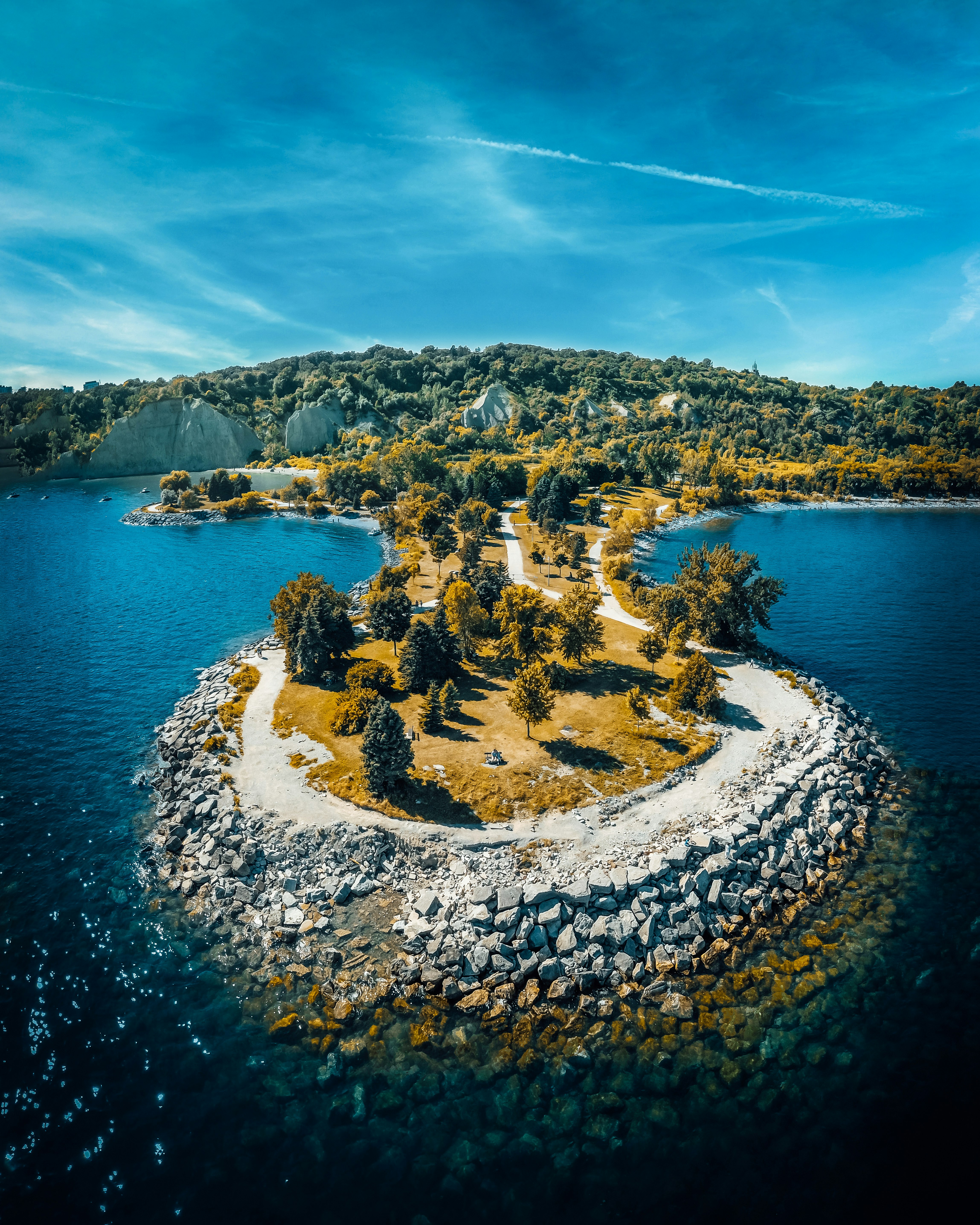
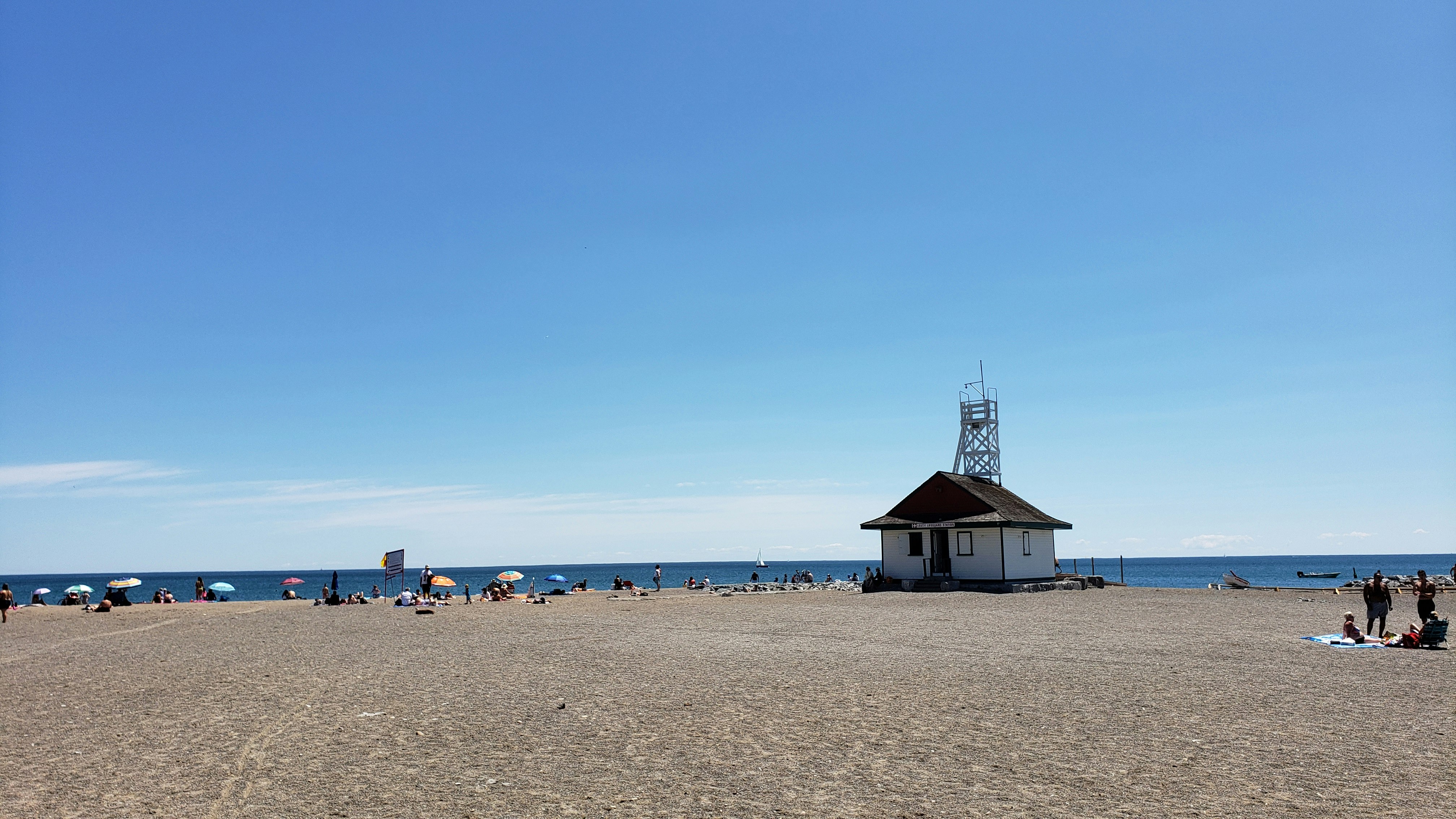
Once you're in the park, the riding is easy. Flat paths along the waterfront, the marina to one side, the lake stretching out to the south. The beach has a good energy to it, especially on weekends. People barbecuing, kids playing, the whole scene spread out along the sand with the bluffs towering behind. On a nice day, biking to the Scarborough Bluffs makes it a great day
Two Views of the Bluffs
There are two ways to see the Scarborough Bluffs:
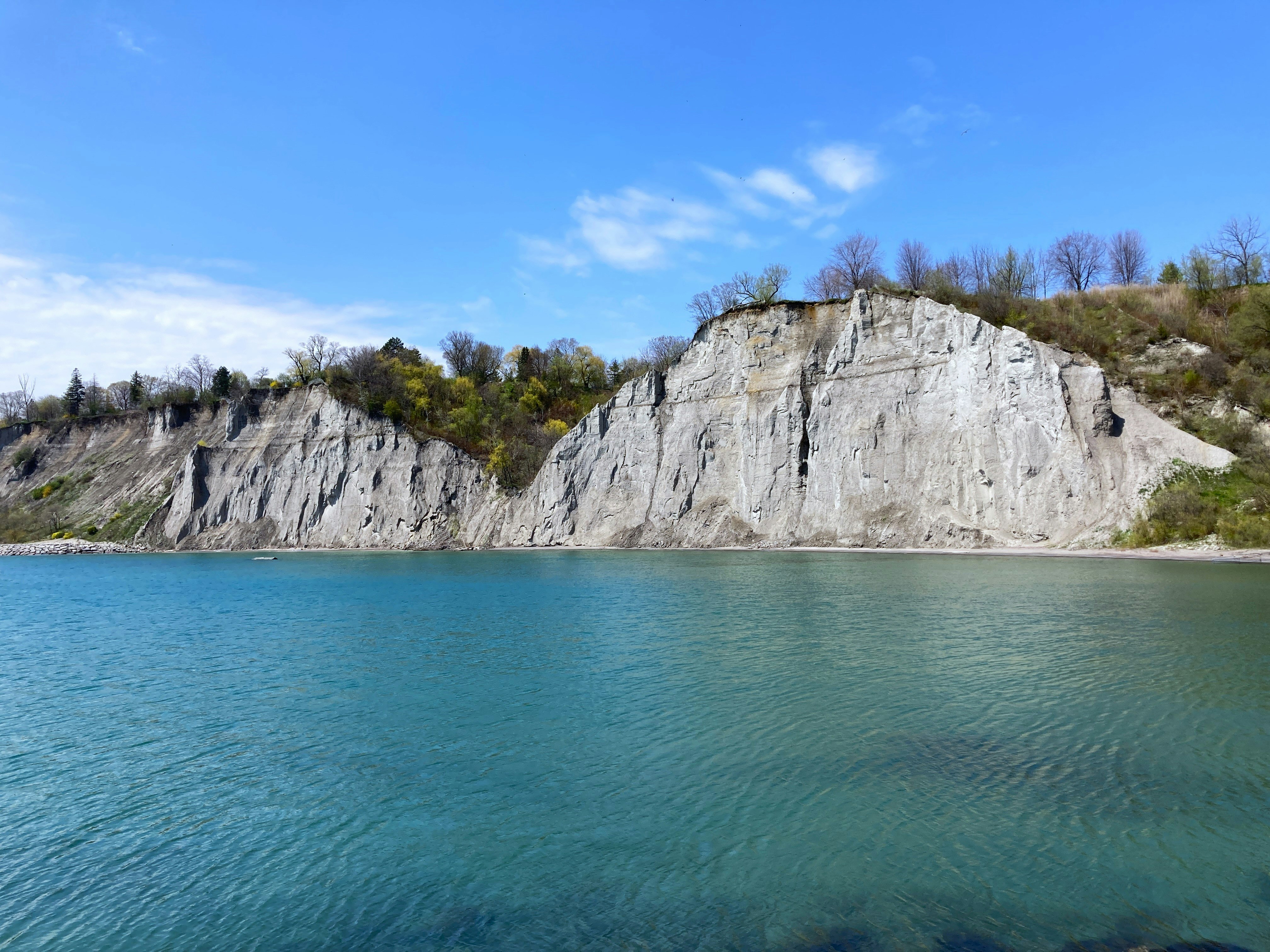
From the bottom, inside Bluffer's Park, you look up. The bluffs rise above you like layered walls of sand and clay. Standing at the base and looking up, you understand why this is one of Toronto's iconic natural landmarks. The beach sits at the end of it all, and the water is right there.
From the top, near Scarborough Crescent Park, you look out. Lake Ontario spreads to the horizon, and the bluffs drop away below your feet. Take in the full sweep of the escarpment stretching east and west along the shoreline. Getting to this viewpoint requires a detour off the main trail onto a dirt and gravel path through the forest. There's some climbing involved and the surface is rough but it's worth it.
The Climb
Here's the thing about Brimley: you have to go back up. There's no other way out. The climb is about 1.5 kilometres of sustained uphill, and by the halfway point you'll feel every metre of elevation you descended so casually on the way in. It's the kind of climb that makes you stand up on the pedals and question your route choices.
But it's also the kind of climb that feels genuinely good to finish. There's a reason cyclists come here specifically to train. The gradient is consistent, the road is wide enough to feel safe, and the sense of accomplishment at the top is real. If you're looking to push yourself, this is the ride that does it.
Worth Knowing
You're looking at 12,000 years of geological history
The Scarborough Bluffs are the exposed remains of an ancient river delta that formed about 70,000 years ago during the advance of the Wisconsinan glacier. The lower half of the cliffs, roughly 46 metres, is made up of sediment containing plant and animal fossils from that era. Layered on top of that are 60 metres of sand and clay deposited by four separate advances and retreats of the ice. The last glacier pulled back about 12,000 years ago, and what you're looking at is the cross-section it left behind.
The bluffs were once the shoreline of Glacial Lake Iroquois, a much larger and higher predecessor to Lake Ontario. As the lake level dropped and the climate warmed, erosion sculpted the sediment into the cliff faces you see today. The same eroded material that washed off the bluffs drifted west along the lakeshore and eventually formed the Toronto Islands.
Elizabeth Simcoe, wife of Upper Canada's first lieutenant governor, named this stretch of coastline in 1793 because it reminded her of the chalk cliffs in Scarborough, England. The name stuck for the cliffs and eventually for the entire district surrounding them.
The cliffs are still eroding. What you see today is different from what stood here a decade ago, and different from what will stand here a decade from now.