Personal Review
My take on this trail.
The Ride
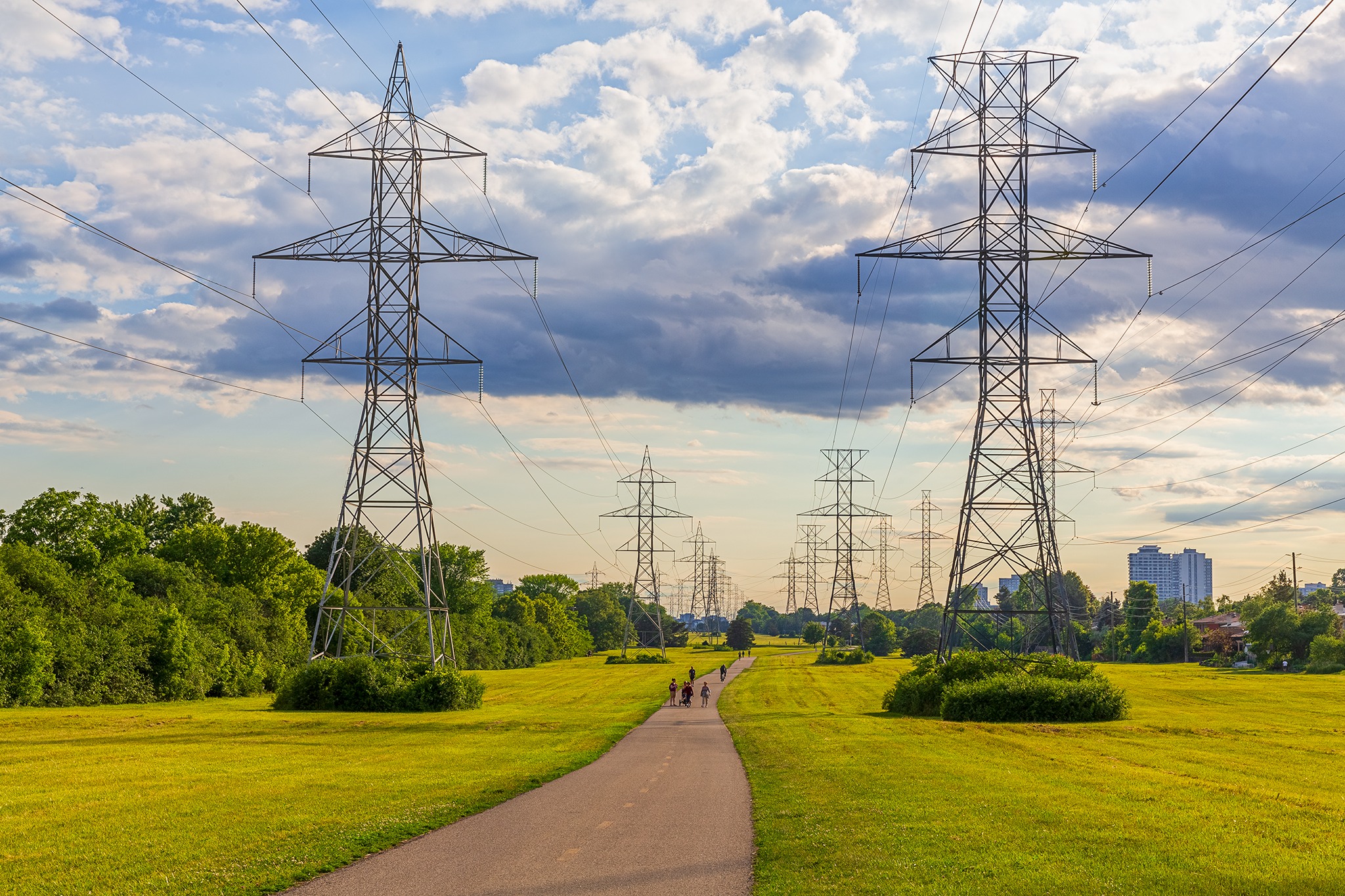
The first thing you notice on the Finch trail is the sky. Without trees or buildings to frame it, the sky out here is enormous. And beneath it, the grass. Tall and dense, knee-high by midsummer, running the full length of the path on both sides. When the wind moves through it, the whole field shifts at once, a wave of green rolling from one end of your vision to the other. Sometimes it's scattered with wildflowers. Sometimes it's just grass, and that's enough.
Above the grass, the transmission towers. They march along the corridor, the power lines humming a low constant note. Most people wouldn't call them beautiful. I would. Their literal towering over you grants the feeling that the world can be a bit bigger than one might think.
And then the wildflowers. This is the contrast that makes the trail. In spring and early summer, the fields fill with colour. Purple vetch, goldenrod, Queen Anne's lace, scattered through the grass in patches that nobody planted and nobody tends. There are power lines overhead and wildflowers at your feet, and somehow the combination works.
The path itself is gently curving. Long, slow bends that straighten out and curve again, over and over for 15 kilometres. Riding them feels like a moving meditation. You don't have to make decisions. You don't have to navigate. The path curves and you follow it, and after a while your mind does what it wants to do when you stop directing it. You notice things – a hawk, a cloud, the way the grass changes colour near a drainage channel.
This trail doesn't announce itself. There's no dramatic payoff, no famous landmark at the end, no moment where you stop and say "this is it." What it has is 15 kilometres of open sky and the particular peace of a place you return to so often it becomes part of your rhythm. I've ridden it dozens of times. I'll ride it dozens more.
Two Spots Worth Stopping For
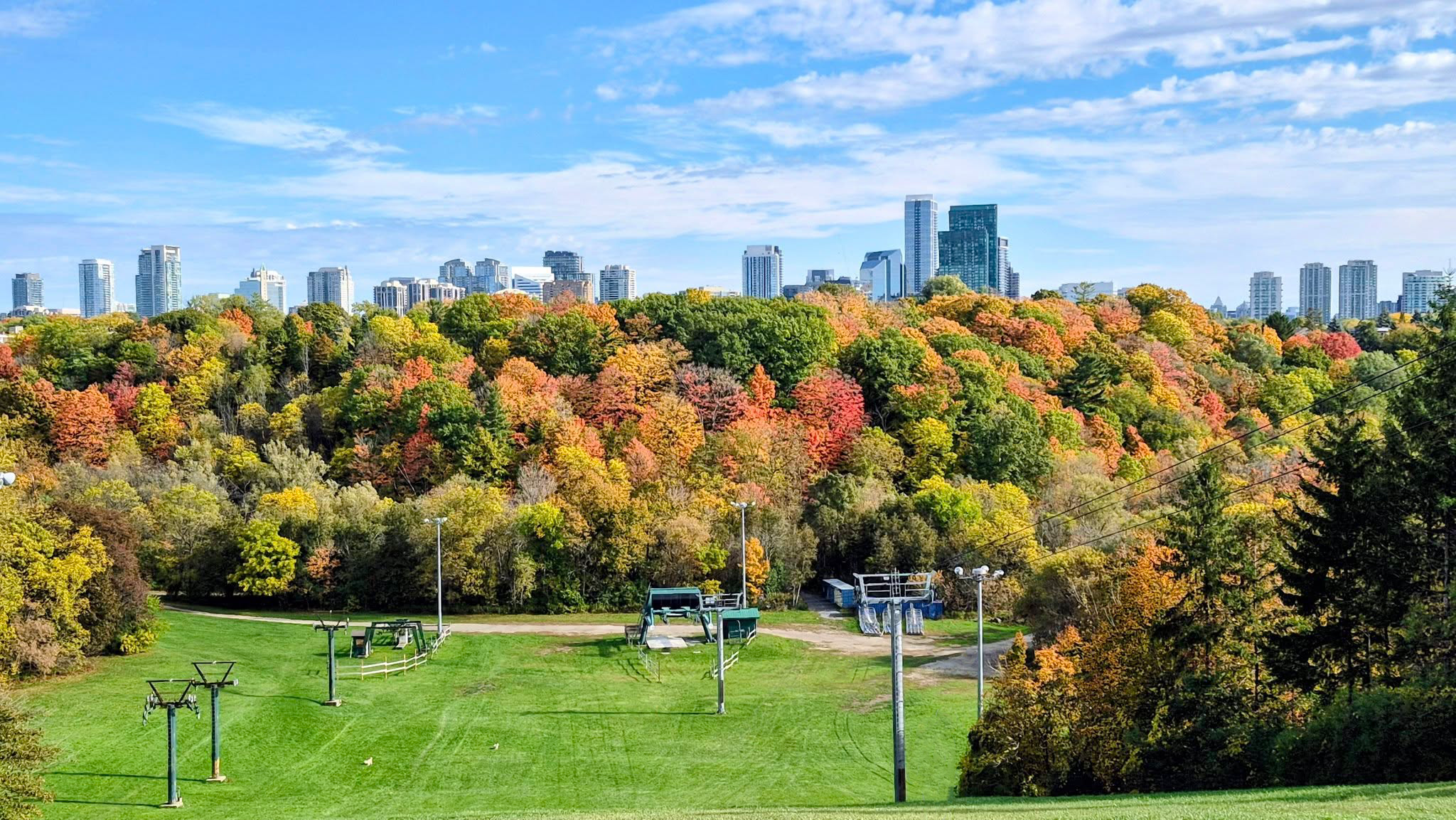
The first is the East Don River descent. At the eastern trailhead, there's a long, controlled descent toward the East Don River valley below. It's not steep enough to be dangerous, but it's steep enough to feel it. The wind picks up, the bike accelerating. At the bottom, the East Don River Trail connects.
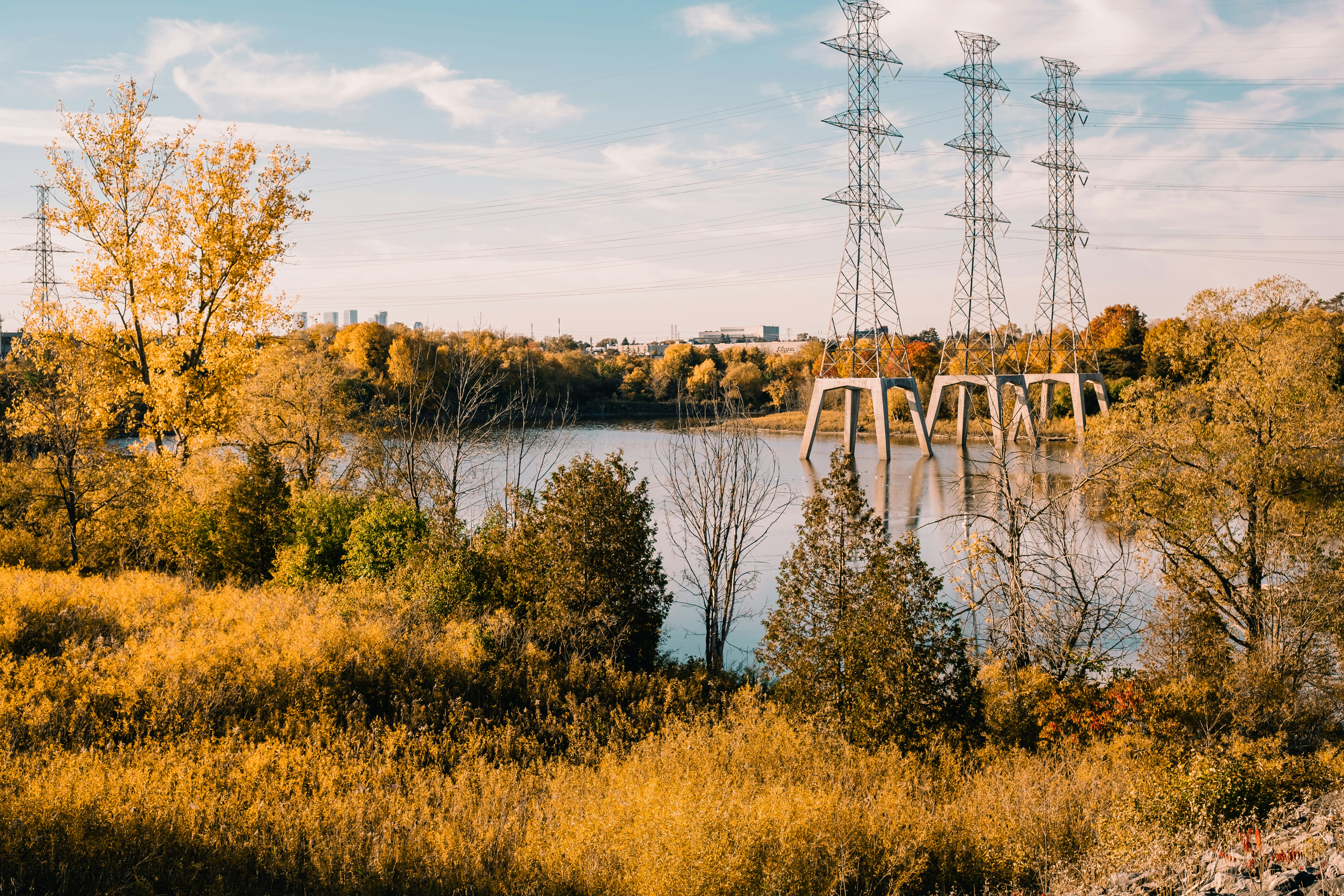
The second is G. Ross Lord Reservoir, sitting wide and calm near the middle of the trail. It's one of Toronto's less-known waterfront moments, and all the better for it. I've sat here more times than I can count, watching the sun glisten off the surface of the water. The reservoir is surrounded by open parkland. No fences, no crowds, just water and sky. After long roads of green grass, arriving here feels like a natural rest stop.
A Trail for All Four Seasons
The Finch Hydro Corridor is more season-sensitive than most Toronto trails because it's fully exposed. No canopy, no shelter, nothing between you and whatever the sky is doing. That sounds like a disadvantage. It's not. It means you notice the signs of seasons changing more clearly here than almost anywhere else in the city.
Spring is when the trail comes back to life. The grass turns that particular shade of new green that only exists for a few weeks. The wildflowers start to arrive. The air smells different. The light is longer. This is the best time for the full 15-kilometre end-to-end, when the trail feels renewed and the wind is still gentle.
Summer means full sun exposure all day. There's no shade on this trail. Go early morning or late afternoon. The grass is at its tallest and most ocean-like, moving in waves. Bring water, wear sunscreen, and if you can time it right, ride to G. Ross Lord Reservoir in the late-afternoon light. The water in late summer is at its most beautiful.
Fall is when I love this trail most. The grass turns amber and gold, and the whole corridor fills with orange and red along the treelines You can see the season arriving from the trail. You can watch it move through the landscape in real time.
Winter strips the trail back. The grass is gone. The fields are brown and flat. It's not the most comfortable ride. The wind off the open corridor is cold and steady, and the path can be icy after a freeze. But there's a particular beauty to having the trail almost entirely to yourself, riding through a landscape that's been reduced to its simplest elements: sky, ground, path, forward.
Every season gives you a different version of the same trail. That's rarer than it sounds.