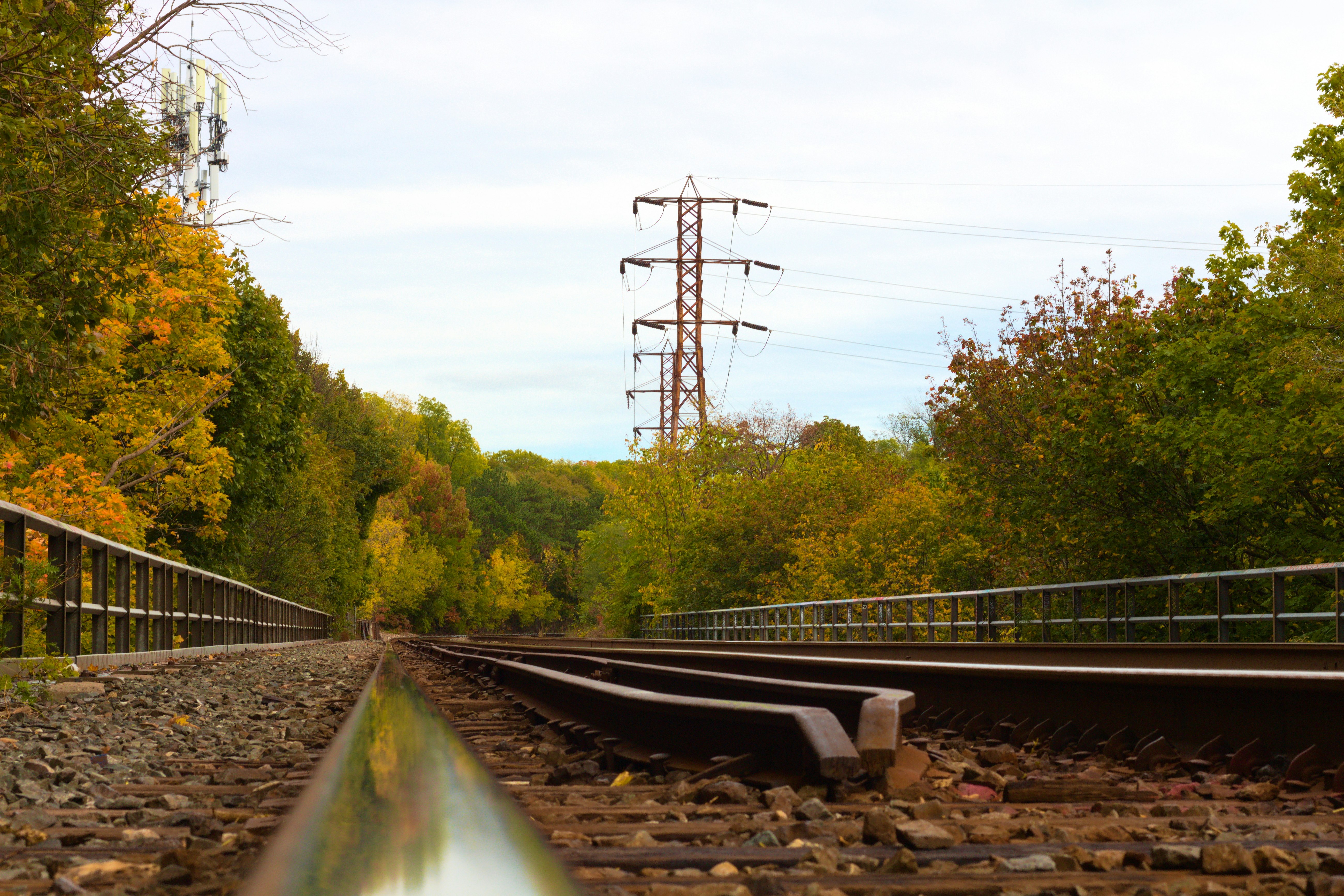
Personal Review
My take on this trail.
The Ride
I'll be straight with you: Taylor Creek Park is not going to stop you in your tracks. It's not going to give you a moment you'll describe to people for a week. What it gives you is 3.2 kilometres of consistent, genuine beauty. It doesn't announce itself but accumulates quietly until you realize that the ride has brought a smile to your face and you're not sure exactly when it arrived.
The creek is the trail's constant companion. It follows you the whole way. Not loud, not dramatic, just present. The whole trail feels alive in a way that paved urban paths don't. There's moving water beside you, and something about that makes the ride feel different. It's less like exercise, more like being somewhere.
There's life everywhere along this trail. Wildflowers scattered along the edges of the path. Trees overhead, filtering the light into something soft and green. Birds in the branches adding to the sounds of the place. People moving through at their own pace: walkers, other cyclists, someone sitting on a bench reading. The trail buzzes with small life, nothing singular, everything consistent. By the time you reach the other end, you feel like you've moved through something rather than past it.
But at 3.2 kilometres one way, it goes quickly in a ravine. Before you know it you're approaching E.T. Seton Park at the western end or Warden Woods at the east, and the trail has ended almost before you wanted it to. That's not really a criticism. A trail that leaves you wanting more is doing something right. It just means Taylor Creek works better as a chapter in a longer ride than as a destination on its own.
The Part Nobody Tells You About
There are forks in the path where the creek flows directly over the trail. Not alongside it, but over it. Shallow water moves across the ground, a few centimetres deep, enough to wet your tires and send a small spray off the wheels, not enough to soak your shoes if you keep your speed up.
Some people stop and walk around on the dry shoulder. Some people slow down and pick their way through carefully. And some people (I am in this group) ride straight through at full pace because the feeling of it is pure, uncomplicated, dumb joy. There's no practical reason to ride through the water. It's just fun in the way that splashing through puddles was fun when you were eight, and it turns out that feeling doesn't go away just because you grew up and bought a hybrid bike.
Small moments of unexpected joy are what make a good ride a memorable one. Taylor Creek has a few built into the path.
Where It Takes You
At the western end, the trail opens near E.T. Seton Park. One moment you're in a forested corridor with the canopy overhead, and the next, the sky opens up and the park spreads out in front of you, flat and bright. From E.T. Seton you can connect south into the Don Valley Trail system, which takes you deeper into the city's ravine network and eventually down to the lake.
At the eastern end, Warden Woods picks up where Taylor Creek leaves off. Warden Woods is a smaller, wilder ravine forest that extends the wooded riding if you want to keep going. It's less developed than Taylor Creek, the surface rougher, the trail narrower. Worth exploring if you have the time and a bike that can handle unpaved ground.
At 3.2 kilometres, Taylor Creek is too short to be a destination on its own. My recommendation is to ride it as part of a longer loop. Connect it to the Don Valley system on one end, Warden Woods on the other, and build something bigger out of it. Used that way, Taylor Creek becomes one chapter in a full afternoon of ravine riding.
Worth Knowing
The ravine network beneath the city
Toronto has one of the largest urban ravine systems in the world. Over 300 kilometres of ravine valleys cutting through the city grid. Most Torontonians know they exist. They've crossed a bridge over one, or noticed the treeline dropping away on either side of a road. But few people fully appreciate the scale of what's down there: an interconnected network of forested valleys, creeks, and trails that runs through almost every part of the city, connecting neighbourhoods that feel completely separate at street level.
Taylor Creek is one small part of that system, connected to the Don Valley, connected to tributaries that thread through the east end and beyond. What the ravines mean for cycling specifically is this: they let you move through the city without touching the surface grid. You drop below the streets into a parallel Toronto, one that operates at a completely different pace and scale. No traffic lights. No car horns. No intersections. Just trail, trees, water, and the sound of your own tires on the path. The city is still up there, a few dozen metres above you. But down here, it feels like a different place entirely.
Once you start exploring the ravine network, you start to understand the city differently. You start to see Toronto not as a grid of streets but as a web of green valleys with a city built on top of them.
Taylor Creek is a good place to start. Ride it once, and you'll want to find out where the next ravine goes.